
2026 State of Sarcoma: What to Expect in Washington, D.C.
On Saturday, September 19, the Rhabdo Coalition will once again bring families, advocates and leading pediatric sarcoma researchers together in Washington, D.C. for the 2026 State of Sarcoma.
Held at the JW Marriott Washington, D.C. during CureFest weekend, State of Sarcoma is designed to create something families rarely have an opportunity to experience: an open conversation with researchers about where pediatric sarcoma research stands today, where progress is happening, where we remain stuck and what it will take to create better treatment options for children.
The morning will focus on rhabdomyosarcoma, osteosarcoma, Ewing sarcoma and other pediatric sarcomas, while giving families time to connect directly with researchers and with one another.
What to Expect
Doors will open at 8:30 AM, with the researcher program beginning at 9:00 AM.
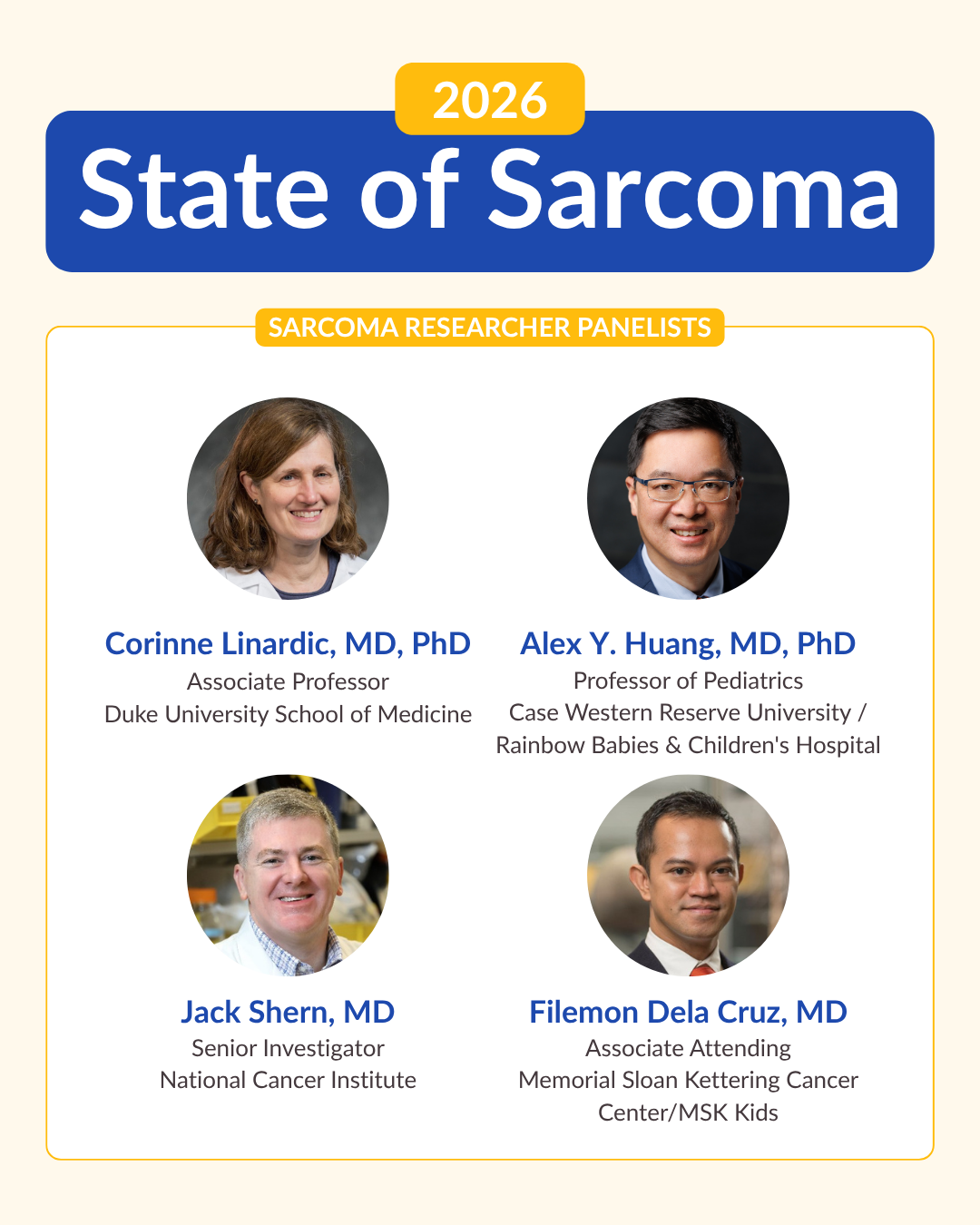
From 9:00–10:30 AM, attendees will hear directly from four leading pediatric sarcoma researchers:
Corinne Linardic, MD, PhD, Duke University School of Medicine
Alex Y. Huang, MD, PhD, Case Western Reserve University / Rainbow Babies & Children’s Hospital
Jack F. Shern, MD, National Cancer Institute
Filemon Dela Cruz, MD, Memorial Sloan Kettering Cancer Center / MSK Kids
Rather than a series of traditional research presentations, the program is built around conversation.
We want to help families better understand what is happening in the laboratory and clinic, while also giving researchers an opportunity to speak candidly about the challenges that remain.
The discussion will explore questions families regularly ask after a sarcoma diagnosis. Where are we genuinely making progress? We’ll also look toward what comes next.
Families hear about major advances across cancer research, including immunotherapy, targeted treatments, precision medicine and new ways to detect and monitor disease. We want to understand how those advances are translating into pediatric sarcoma research and where researchers see the greatest opportunities ahead.
We’ll ask whether the next major breakthrough is likely to come from one transformative new treatment or from learning how to combine and sequence existing and emerging approaches more effectively.
Having the Hard Conversations
State of Sarcoma is also a place for the questions that can be difficult to ask.
For many families, one of the hardest realities of pediatric sarcoma is seeing how much science has advanced while some children with metastatic or relapsed disease continue to face treatment options that have changed far too little.
We want to talk openly about that disconnect.
Why does promising science sometimes take so long to reach children? What barriers stand between a discovery in the laboratory and a new treatment in the clinic? What can researchers, institutions, foundations and families do differently to accelerate progress?
These conversations can be complicated. They are also important.
Families deserve the opportunity to understand what researchers are learning, what remains unknown and what gives them reason for hope.
Time to Connect
When the researcher panels conclude at 10:30 AM, the conversation continues.
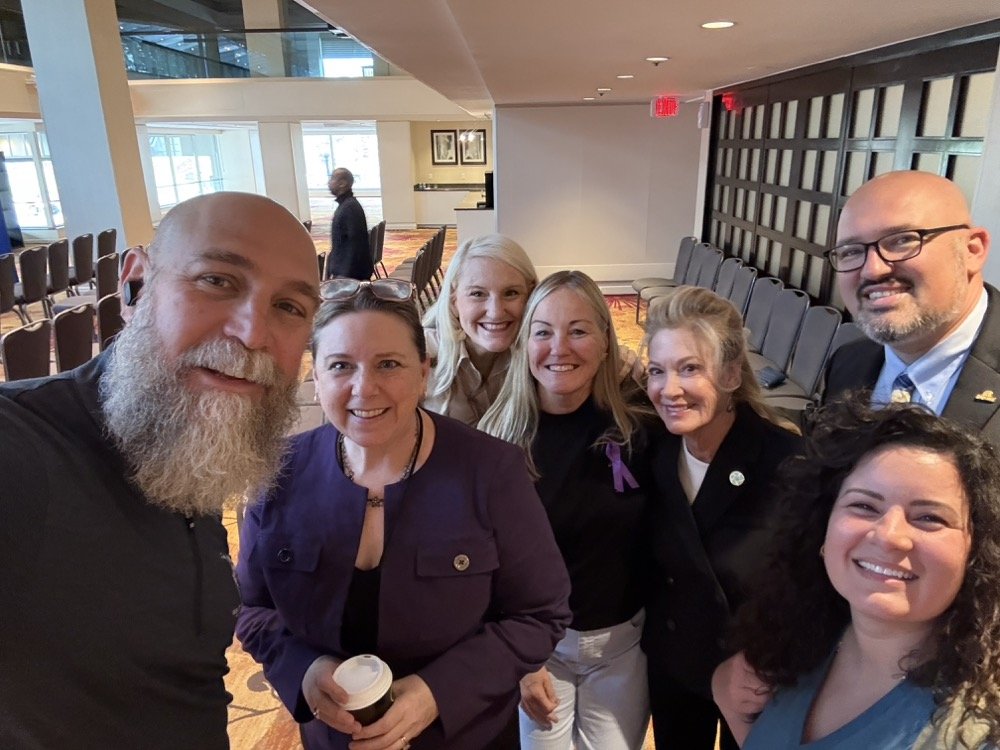
From 10:30–11:30 AM, attendees will have dedicated networking time to meet researchers, connect with other sarcoma families and continue conversations that began during the panels.
That part of State of Sarcoma has become just as important as the formal program.
There is tremendous value in a parent being able to introduce themselves to a researcher working on their child’s disease. There is value in researchers hearing directly from families about what treatment actually looks like outside the laboratory. And there is value in families who may live hundreds of miles apart realizing that they are part of a much larger community working toward the same goal.
Where Stories and Science Meet
The Rhabdo Coalition was created around the belief that collaboration matters.
Researchers bring decades of scientific knowledge and a deep understanding of the biology driving these diseases. Families bring lived experience, urgency and questions that can sometimes challenge the way we think about progress.
State of Sarcoma brings those perspectives into the same room.
Our goal is for families to leave with a better understanding of where pediatric sarcoma research stands today and for researchers to leave with an even stronger connection to the children and families behind the science.
Most importantly, we hope the conversations that begin in Washington continue long after everyone goes home.
2026 State of Sarcoma
Saturday, September 19, 2026
JW Marriott Washington, D.C.
Doors Open: 8:30 AM
Researcher Panels: 9:00–10:30 AM
Networking: 10:30–11:30 AM
We hope you’ll join the Rhabdo Coalition in Washington, D.C. as families, advocates and researchers come together to learn, connect and help move pediatric sarcoma research forward.
Register at stateofsarcoma.org.